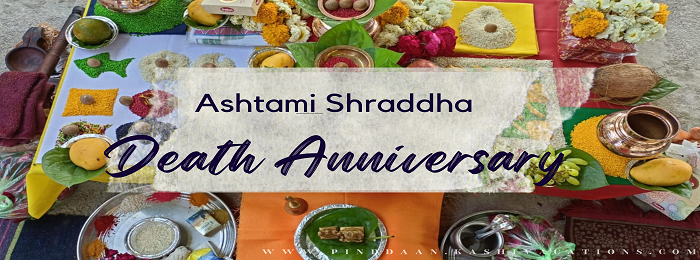
Ashtami Shraddha and Death Anniversaries
Ashtami refers to the eighth day in both the waxing (Shukla Paksha) and waning (Krishna Paksha) phases of the moon in the Hindu lunar calendar. While Amavasya (new moon day) is more commonly associated with Shraddha rituals, certain other Tithis, including Ashtami, also hold significance for performing Shraddha rites.
Shraddha is a ritual to honor and pay homage to one's ancestors (Pitrs). This ritual involves offering food, water, and prayers to ensure the departed souls' peace and spiritual progress.
-
Significance of Ashtami for Shraddha
Ashtami Shraddha: This is performed on the eighth lunar day and is particularly observed by those whose ancestors passed away on this Tithi. It's a part of the broader Pitrupaksha (fortnight dedicated to ancestors) but can also be performed monthly on Ashtami.
Special Significance: While not as universally observed as Amavasya Shraddha, Ashtami Shraddha is important for those whose family members passed away on Ashtami. It is believed that performing the Shraddha on the same Tithi ensures the ancestors' peace and blessings.
Death Anniversary Observance
In Hindu tradition, the death anniversary, or Barsi, is observed with Shraddha rituals. The annual Shraddha is performed on the exact Tithi (lunar day) of the death according to the Hindu lunar calendar. If the death occurred on Ashtami, then the Shraddha is performed on Ashtami each year.
Rituals and Practices
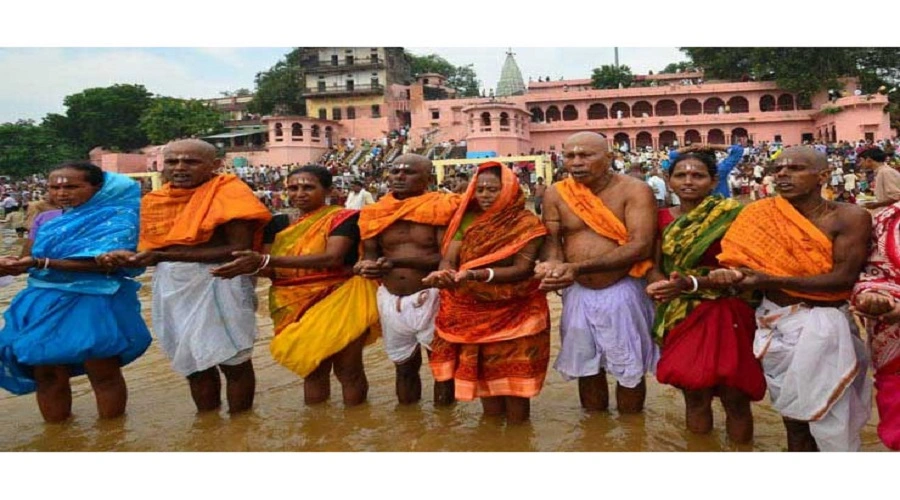
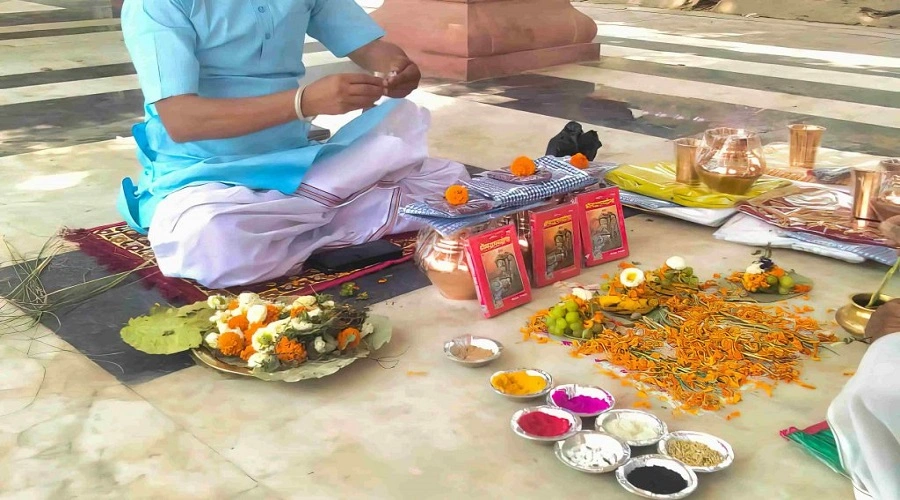
Tarpana: Offering water mixed with black sesame seeds to the ancestors.
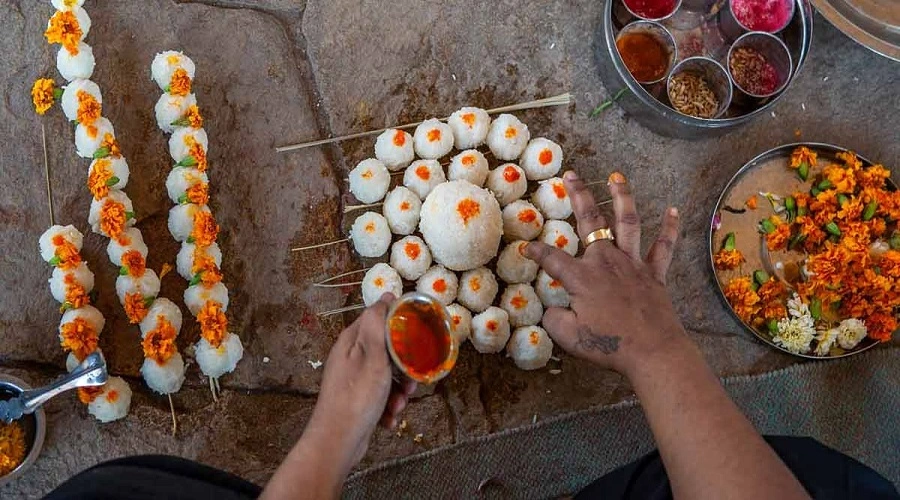
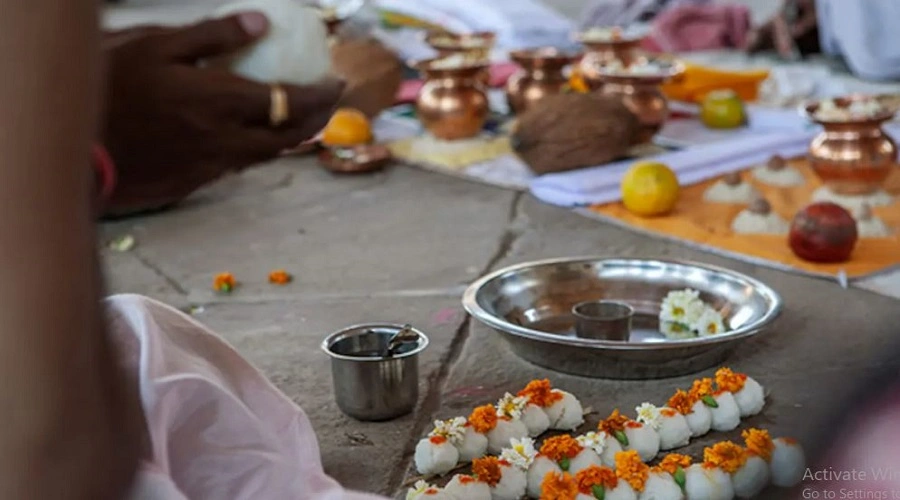
Pinda Daan: Offering rice balls (Pindas) made of cooked rice, barley flour, and black sesame seeds.
Pooja and Homa: Conducting a pooja (prayer ceremony) and homa (fire ritual) to invoke the ancestors and deities, seeking their blessings and peace.
Feeding Brahmins: Inviting Brahmins to partake in a meal prepared for the occasion, as it is believed that feeding Brahmins helps in appeasing the ancestors.
Charity and Donations: Making donations in the form of food, clothes, and money to the needy, as acts of charity are considered meritorious on this day.
Key Elements of Ashtami Shraddha
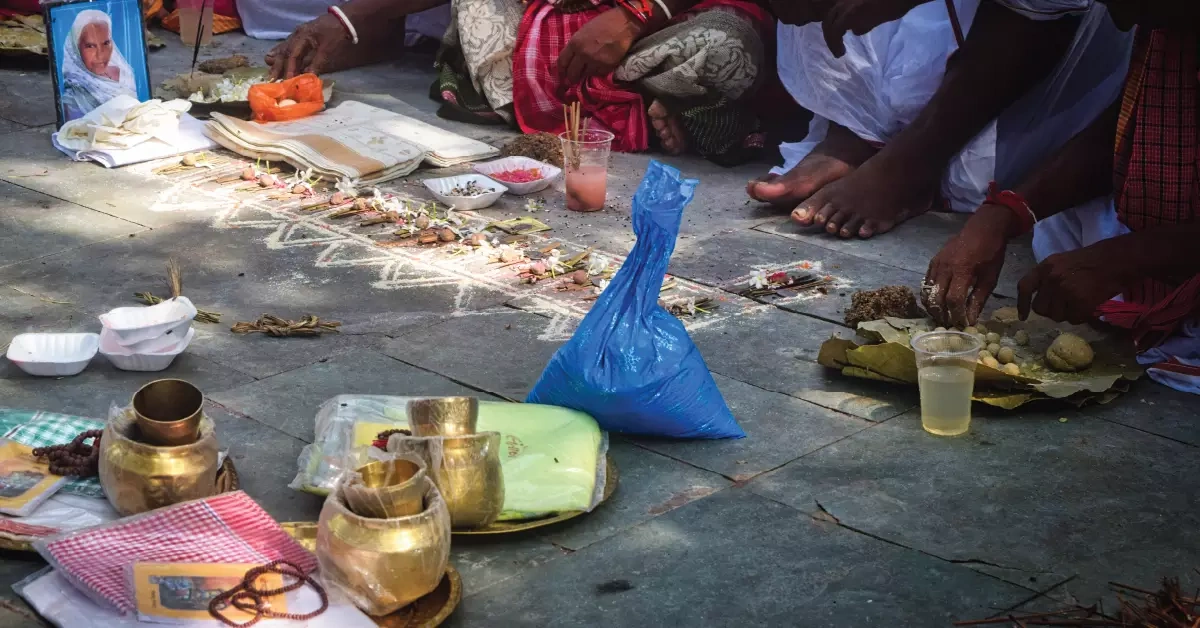
Preparation: Clean the house and prepare a sanctified area for the rituals.
Offerings: Prepare traditional foods and offerings that are liked by the departed souls.
Invocation: The head of the family, usually the eldest male, performs the invocation of ancestors, offering Tarpana and Pinda Daan.
Pooja and Homa: A priest may be invited to perform the pooja and homa, ensuring all rituals are conducted as per Vedic guidelines.
Community and Family Participation: Involve family members and invite community members to join in the ritual, enhancing the collective prayers and blessings.
Conclusion
Ashtami Shraddha, like other Shraddha rituals, is a profound way to honor and remember deceased ancestors. By observing these rituals on the exact Tithi of their passing, Hindus believe that they can provide peace to the departed souls and receive their blessings in return. These practices reflect the deep respect and gratitude for ancestors inherent in Hindu culture.