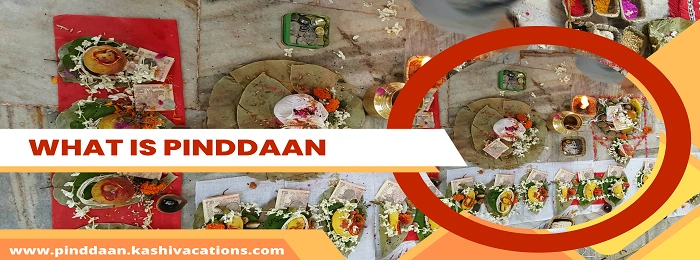
What is Pinddaan? Meaning, Importance, and Complete Procedure
Pinddaan is one of the most sacred rituals in Hinduism, performed to honor deceased ancestors and help their souls attain peace (Moksha). According to the Garuda Purana, Mahabharata, Vishnu Purana, and other Hindu scriptures offering Pinddaan is considered a sacred duty (Pitru Rin) of every Hindu family. It is believed that this ritual satisfies the departed souls, removes ancestral obstacles (Pitru Dosh), and brings happiness, prosperity, and blessings to future generations.
Among all pilgrimage destinations, Varanasi (Kashi) holds a unique place for performing Pinddaan because it is believed to be the city of Lord Shiva, where souls can attain liberation. Every year, thousands of devotees from India and abroad visit Kashi to perform Pinddaan, Shradh, Tarpan, and Asthi Visarjan.
-
Meaning of Pinddaan
The word Pinddaan is derived from two Sanskrit words:
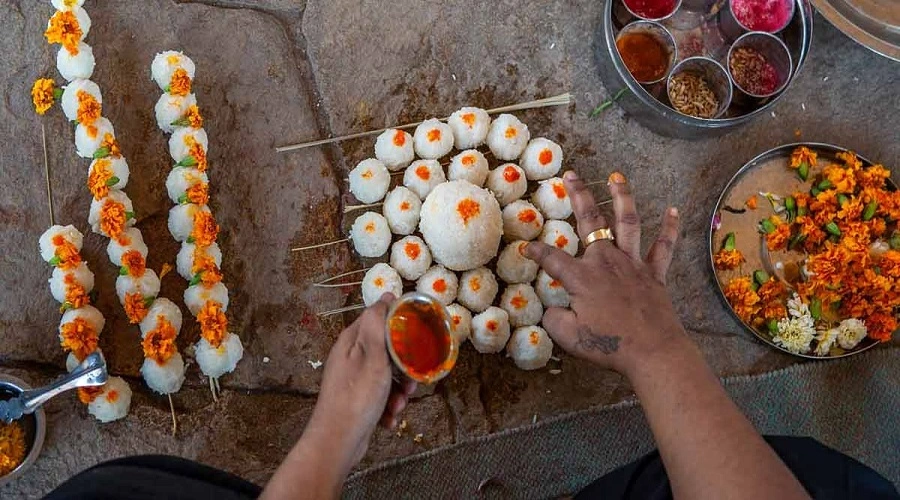
Pinda – A sacred offering made from cooked rice, barley flour, black sesame seeds (Til), ghee, and honey.
Daan – An offering made with devotion and faith.
Thus, Pinddaan literally means offering sacred food to departed ancestors for their eternal peace and liberation.
These offerings symbolize love, gratitude, remembrance, and fulfillment of one's responsibilities toward ancestors.
-
Why is Pinddaan Important?
According to Hindu beliefs, every individual has three debts:
Deva Rin (Debt to Gods)
Rishi Rin (Debt to Sages)
Pitru Rin (Debt to Ancestors)
Performing Pinddaan helps fulfill Pitru Rin, ensuring peace for departed souls and blessings for descendants.
It is believed that when ancestors are satisfied:
Family prosperity increases.
Health and happiness improve.
Obstacles in marriage and career reduce. ?
Peace prevails within the family.
Negative ancestral influences (Pitru Dosh) are reduced.
-
3. Om (Aum) :
Cosmic Sound and Universal Truth: The sacred syllable "Om" represents Brahman, the ultimate reality. Chanting it symbolizes aligning oneself with the eternal and transcending the ego.
Meditative Liberation: It is a tool for achieving inner stillness and union with the divine.
-
Conclusion:
Pinddaan is one of the most meaningful traditions in Hinduism, expressing gratitude, remembrance, and prayer for departed ancestors. Whether performed during Pitra Paksha, on a death anniversary, or while visiting the sacred city of Varanasi, the ritual reflects a deep connection between generations and the belief in seeking peace for those who have passed away.
If you are planning to perform Pinddaan in Varanasi, choosing experienced Vedic priests and proper guidance can help ensure that the ceremony is conducted according to traditional customs with devotion and respect.
The rituals associated with Asthi Visarjan vary depending on regional customs and family traditions. However, some common elements include:
Who Should Perform Pinddaan?
Traditionally, Pinddaan is performed by: Son, Grandson, Great-grandson, Brother, Husband, Other close male relatives
In certain situations, women may also perform the ritual under the guidance of qualified priests, depending on family traditions and local customs.
Best Time to Perform Pinddaan
Pinddaan can be performed throughout the year, but some occasions are considered especially auspicious:
Pitra Paksha
Amavasya (New Moon)
Death Anniversary (Shradh Tithi)
Mahalaya Amavasya
Solar and Lunar Eclipse (where traditions permit)
During pilgrimage to sacred places
Why is Varanasi Famous for Pinddaan?
Varanasi is one of the world's oldest living cities and is believed to be the eternal abode of Lord Shiva.
Religious significance includes:
Holy River Ganga
Kashi Vishwanath Temple
Manikarnika Ghat
Ancient Vedic traditions
Presence of experienced Vedic priests
Hindu scriptures state that rituals performed in Kashi carry immense spiritual merit and are believed to assist souls in attaining liberation.
Complete Step-by-Step Pinddaan Procedure
1. Sankalp (Sacred Resolution) The devotee takes a sacred vow stating the purpose of the ritual and the names of the departed ancestors.
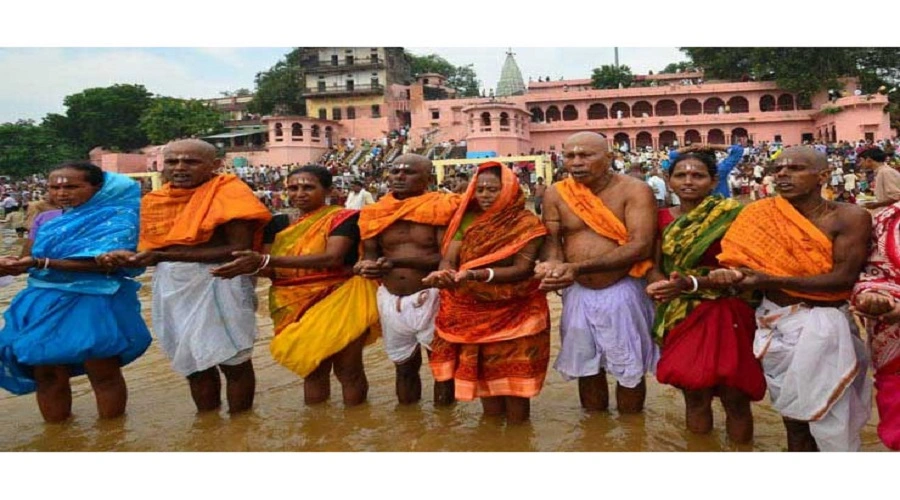
2. Holy Bath The ritual begins with a purifying bath in the sacred River Ganga.
3. Invocation of Ancestors The priest chants Vedic mantras while invoking the departed souls.
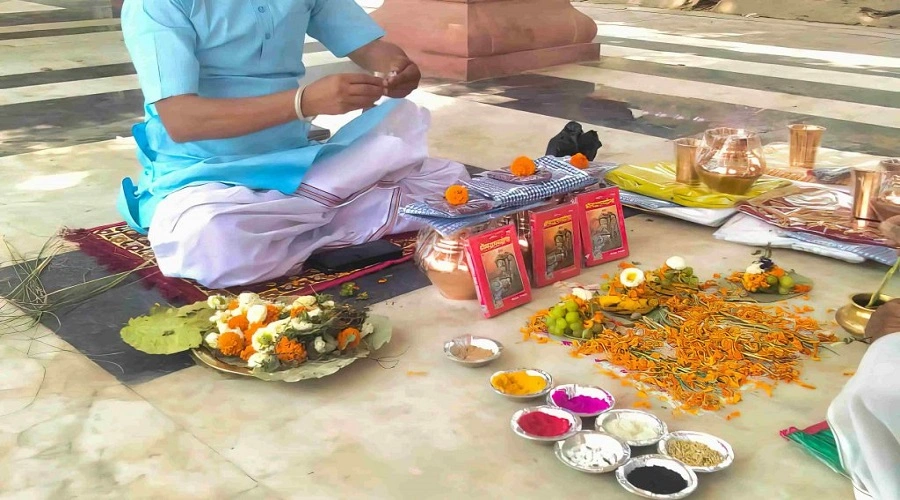
4. Preparation of Pinda Sacred balls are prepared using: Cooked rice, Barley flour, Black sesame seeds, Honey, Ghee
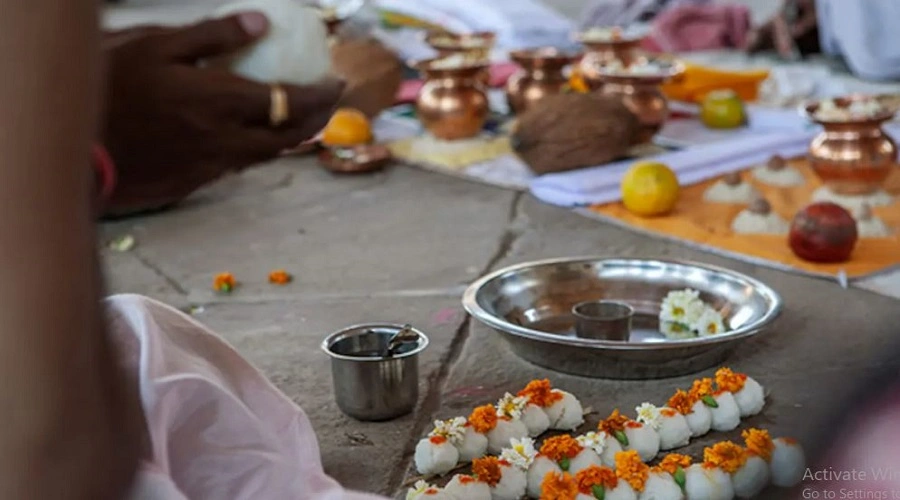
5. Offering the Pinda The prepared offerings are respectfully dedicated to the ancestors with Vedic mantras.
6. Tarpan Water mixed with black sesame seeds is offered while chanting sacred prayers.
7. Brahmin Bhojan & Donation Food, clothes, and donations are offered to Brahmins as part of the ritual.
8. Final Prayer The ceremony concludes with prayers seeking eternal peace and liberation for the departed souls.
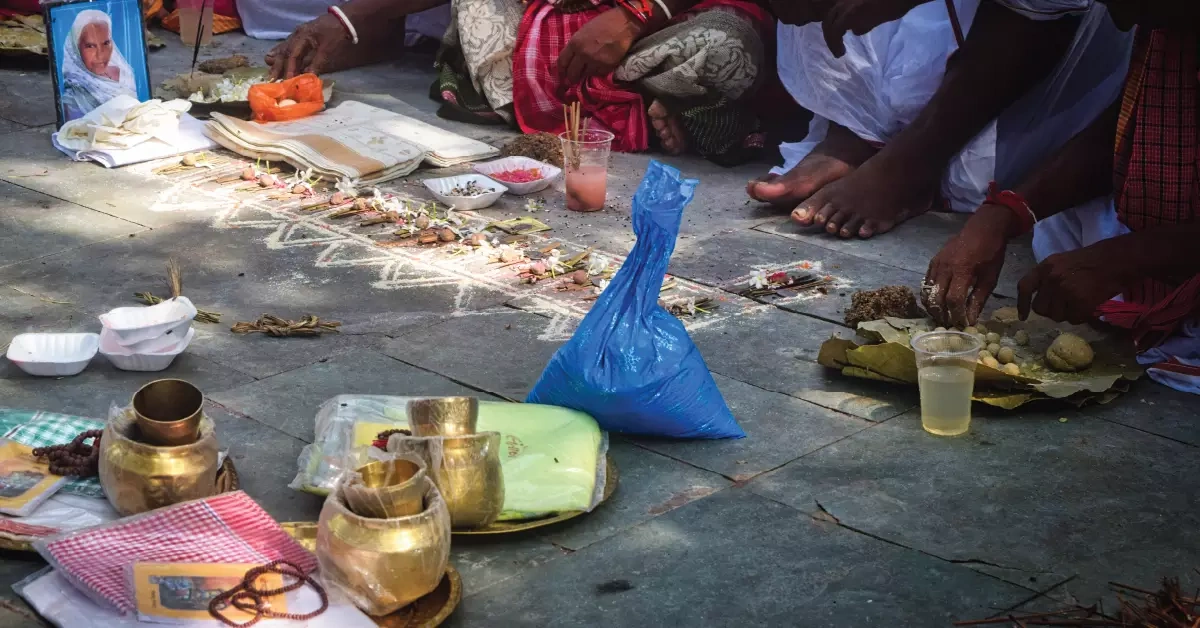
Items Required for Pinddaan White clothing, Cooked rice, Barley flour, Black sesame seeds, Ghee, Honey, Flowers, Sacred grass (Kusha), Holy water, Fruits, Dakshina (offering for priest)
Benefits of Performing Pinddaan
According to Hindu tradition, Pinddaan is believed to:
Bring peace to departed souls.
Help fulfill duties toward ancestors.
Reduce Pitru Dosha.
Bring family harmony.
Support spiritual well-being.
Strengthen gratitude toward previous generations.
Promote positive family traditions.
Enhance inner peace through remembrance and prayer.